The short answer
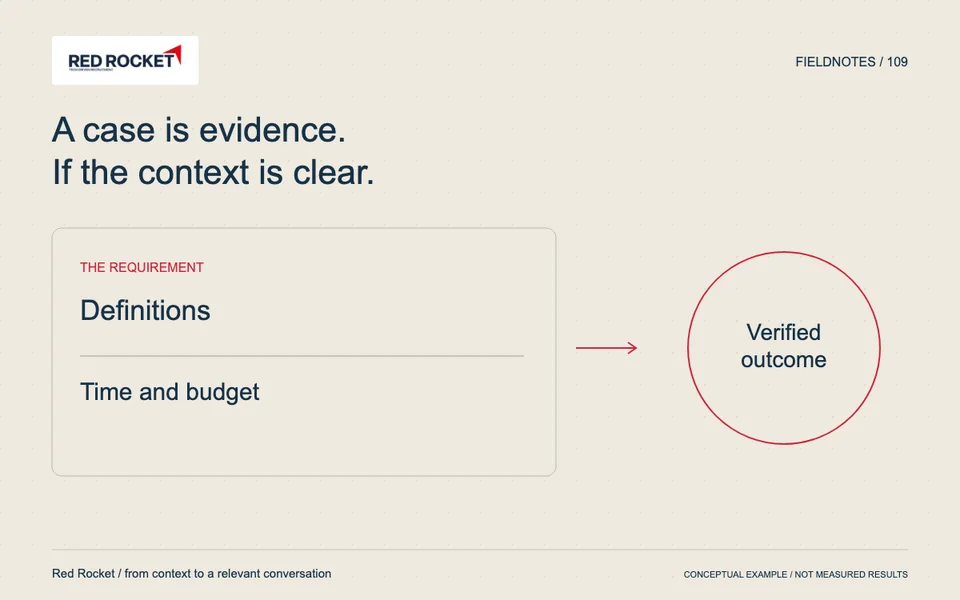
Always check the time period, the definition of success, the budget, and the role context. Ask whether the result was driven by the agency or by other factors. A solid case explains which steps were taken, not just what was achieved. That way you compare agencies on approach, not on marketing figures.
Bring one vacancy. In 30 minutes, we discuss where your recruitment is getting stuck, which approach could fit and your recruitment fee.
Why a case study can mislead as easily as it informs
Agencies present their strongest results. That's understandable, but it makes comparison difficult. A case without a time period, without context about market conditions, and without a clear role description tells you very little. Ask yourself: would this result have happened without this agency? Asking that question is the first step towards an honest assessment.
Step 1 – Check the period and the definition
Ask when the placement happened and how success is defined. Was someone placed, or are they still in the role six months later? Agencies that only count placements measure something different from those tracking a lasting match. Make sure you are comparing like with like before drawing any conclusions.
Step 2 – Assess role context and market conditions
Placing a scarce specialist in a tight market is very different from filling a common role. Ask whether the case is comparable to your vacancy: same sector, same scarcity level, same region. An agency that once found a rare expert has not thereby proved it can find your project manager just as quickly.
Step 3 – Distinguish cause from correlation
A fast placement may reflect a strong agency, but it may equally reflect an attractive salary, a well-known employer, or simply good timing. Ask which concrete steps the agency took: which channels, which selection method, what organisational context was shared with candidates. Approach is assessable. Coincidence is not.
How to weigh cases against each other – and what Red Rocket shows
Draw up a checklist: period, role, approach, definition of success, missing information. Agencies that are transparent about their method – campaign, AI recruiter, organisational context, and personal assessment by the employer – give you more to go on than a single headline figure. Book a conversation and ask us how we approached a comparable role. For further reading on structured selection methods, see OPM – Structured Interviews.
Frequently asked questions
Can I ask an agency for references linked to a case study?
Ask whether a conversation with the client is possible and which information may be shared. Confidentiality can be a valid limitation. Discuss what other verifiable evidence the agency can provide.
What if an agency has no case studies in my sector?
That need not be a dealbreaker. Ask about their approach instead: what steps do they take, how do they learn about your organisation, how do they select candidates? Approach transfers across sectors; sector experience helps but is not everything.
How do I compare agencies when they all use different definitions?
Set your own definition before the conversation starts. Ask each agency: how many candidates do you present, what is your typical timeline, and what is your role after placement? That gives you a shared measuring stick.