The short answer
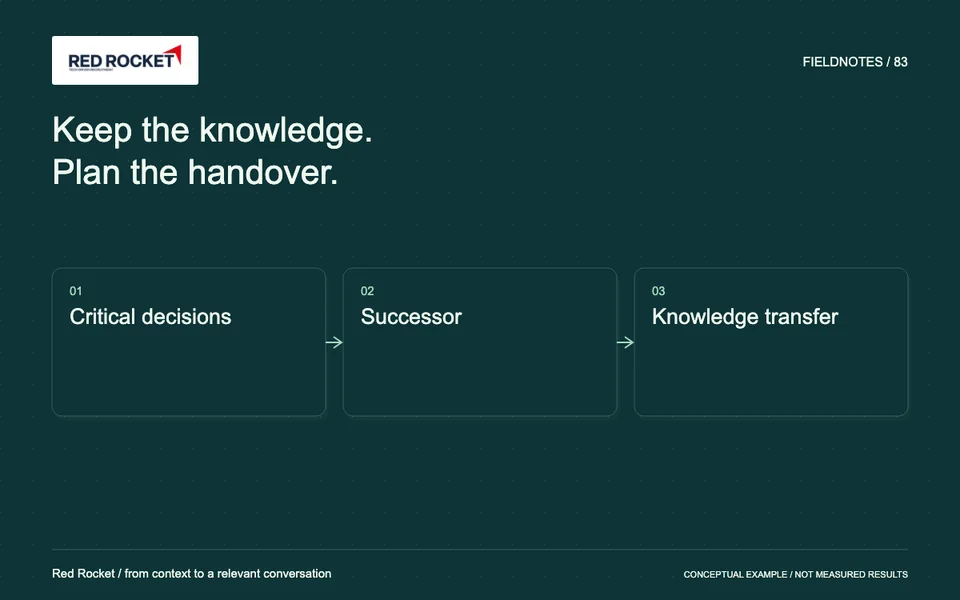
Start by mapping the critical knowledge and decisions currently held by one person. Identify handover risks, honestly explore internal candidates, and only then define an external profile. This prevents a departure from catching your organisation off guard and keeps continuity in technical projects secured.
Bring your role, region and essential criteria. In 30 minutes, we explore how to reach technical people who are not actively looking and which approach could fit your vacancy.
Knowledge lives in people, not in systems
In many technical organisations, crucial knowledge – about project history, suppliers, decisions and working methods – sits implicitly with one or two people. That's fine while they're around. It becomes a risk the moment they leave. The first step in succession planning is therefore not writing a vacancy, but understanding exactly what is at stake.
Step 1 – Map critical knowledge and decisions
Ask the current leader which decisions only they can make, which relationships are personally built, and which technical choices are undocumented. Create an overview: what is transferable, what takes time, what disappears on departure? This overview drives everything that follows.
Step 2 – Organise handover before it becomes urgent
Handover works best without time pressure. Think structured knowledge sessions, joint project supervision, or involving an internal candidate in strategic meetings. Set a realistic timeline. A six-month handover delivers far more than a six-week one.
Step 3 – Explore internal succession honestly
Look at who already carries technical responsibility internally. Assess on concrete experience and learning capacity, not seniority. Discuss openly whether an internal candidate is ready, or could be with targeted support. That conversation is uncomfortable but necessary – and fairer than placing someone in a role without preparation.
Step 4 – Define an external profile as a complement, not a default
If internal progression isn't realistic, or if the organisation deliberately wants fresh perspective, external recruitment begins. Red Rocket combines organisational context, an AI recruiter and targeted campaigns to reach the right profile. Personal assessment and follow-up remain with you as employer or recruiter. Book a conversation to discuss which profile fits your situation. Read more about replacement demand in the technical sector at UWV Labour Market Information – Construction.
Frequently asked questions
Should I wait until someone announces they're leaving?
No. Succession planning works best precisely when there's no immediate trigger. Start as soon as a role is critical enough that a departure would directly affect projects or clients.
How do I avoid unconsciously selecting on age?
Focus on knowledge, decision responsibility and transferability – not on who might be 'close to retirement'. Departures happen for many reasons. A solid plan works regardless of the reason.
What if there's no internal candidate available?
Then external recruitment is the logical next step. Make sure the external profile is based on the knowledge analysis from step 1, not on a generic job description.